
Alex Semadeni
Mike Petrino is a fast walker.
It is an inarguable fact, known extremely well to those that know him. It doesn't matter where he's going. It could be in the gym, on the way to dinner, in the hallway of a hotel – Mike Petrino will inexplicably beat you to the spot you’re heading.
So when Jayda Clark went over to his house to join him on a walk, it shouldn’t have been a surprise that she had trouble keeping up with the Boise State women’s basketball assistant coach. But it was.
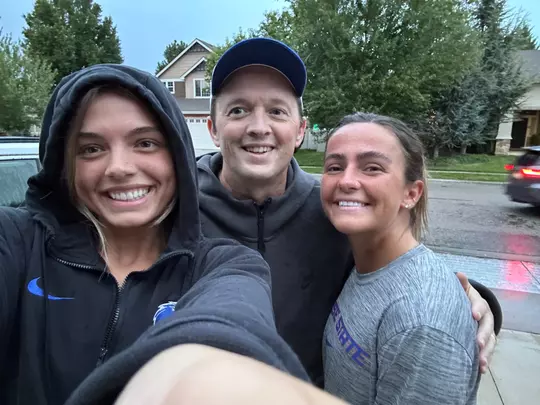
Clark, a current graduate assistant coach for the women’s basketball program, had gone over to her former coaches’ house alongside teammate Mackenzie Naro in an effort to support Petrino. , who at the time had recently undergone emergency open-heart surgery.
“We’re not the best cooks, so we were trying to figure out the best way to be there for him,” Clark jokingly recalled. “We realized he just wanted to hang out. We joined him on one of his daily walks, and he was still walking way ahead of us.”
Petrino had gone into a normal outpatient procedure, upset that he had to miss a practice. He came home five days later with a scar on his chest and instructions that he needed to rest. He spent weeks away from a senior class he knew was destined for a special season, not knowing when he’d be back on the bench.
For the entirety of his career, Petrino had preached to his players that life was a team sport. While recovering from an unexpected double bypass, he found out how much people had been listening.
The First Day of Practice
Petrino first noticed something was off when his routine workouts became a little bit harder.
“My workouts weren't changing, but my ability to complete them was,” he said. “I thought I was just getting old.”
There were plenty of reasons for that to be the case. The transfer portal had just opened, and the coaching staff was on to try compliment a strong senior class. Petrino and the entire coaching staff worked long hours to take on what Petrino refers to as “portal combat.”
During a regularly scheduled physical, Petrino told the doctor what he had been feeling. He was referred to a cardiologist who couldn’t get him in until September.
Petrino kept grinding, flying nearly 8,000 total miles on the recruiting trail that summer. In August, he spent a week in Greece as part of an international trip with the Broncos. He was doing what he does best: staying on the move.
The cardiologist appointment finally came and he underwent a series of checkups. The stress test numbers concerned his cardiologist enough to schedule a quick procedure to take a closer look. He booked it a week out.
Petrino immediately thought of the practice calendar. It was the first day of official practice.
“I remember him telling me that we’re going to schedule it a week out on that next Wednesday,” Petrino said. “I told him we couldn’t do that. It was the first day of practice! He stared at me like I was crazy.”

He begrudgingly called head coach Gordy Presnell, informing his boss that he would unfortunately have to miss the first day of practice. His wife Kelly dropped him off at the hospital early that morning. The plan was for her to pick him up around noon and spend the rest of the day at home resting before rejoining the team for practice on Thursday.
He woke up from the procedure and saw Kelly, assuming it was time to leave. Unfortunately, it wasn’t even 9 a.m.
“I looked at my wife and she told me I wasn’t going home,” he recalls.
The doctor came in and informed him he had an 80% blockage. Before he knew it, he was transferred to St. Luke’s Medical Center and was put on the schedule to have open heart surgery the following day.
“I have never broken a bone in my life before, let alone spent the night in the hospital,” Petrino said. “Now I’m in an ambulance thinking about my family. I’m thinking about my daughter who just started her first year of college. I’m thinking about my other daughter at home with Kelly. I couldn’t really grasp what was going on.”
Kelly called the coaching staff to let them know of the plan. That night, Presnell called Petrino and gave him a pep talk, one that was a little different than one he does prior to games.
Petrino’s mind was racing all night.
“You don’t know if you’re in a dream or a reality or what,” he recalls. “You try to remain calm, but you can't. You can't ignore the situation. It happened so fast so I didn't have time to process. I was just trying to focus on the moment. You really worry about your family. I just couldn’t stop thinking about my family and my daughters."
His mother-in-law drove to Boise from Missoula when she heard the news. A retired emergency room nurse, she’d looked up his surgeon. As he was prepping for the double bypass, she rattled off his credentials, assuring Petrino he was in good hands.
“I’ve spent half of my life putting together scouting reports,” Petrino said. “She put one together for me.”
The next morning was emotional, as he addressed his family one last time before surgery.

“Statistically, everything was going to be okay,” Petrino said. “But there’s always a chance it could go wrong. That morning with my wife was really hard.”
At 6 a.m. on the dot he was wheeled away for open heart surgery.
Four Tenths of a Mile
The first thing Petrino remembers about waking up was how much his chest hurt.
Kelly was there when he awoke, relaying the good news she’d heard from the surgeon. The operation had gone well, he was expected to make a full recovery, etc. All good news, but the pain was hard to ignore.
A coach by nature, he set (doctor-approved) goals for himself in an effort to persevere. The first night, his goal was to sit on the edge of his bed (check). The following day, his goal was to get out of bed and walk around the room (check). By Saturday, he wanted to make the short trip to the nurses’ station (check). He felt sickly with a hospital gown and IVs in both arms, but eventually he was doing laps around the ICU alongside his wife.
Three days after the surgery was the day Petrino felt at his lowest. The pain had yet to subside and he felt his weakness with every movement. Additionally, it was beginning to sink in that he would be out of commission for a while with a prognosis of sitting still for a long period of time.
Kelly could tell he was struggling, so for the first time since his surgery, she pulled out his phone. In it were a flurry of texts from people sending their well wishes. One was from a player he had coached over 30 years ago.
“That was extremely emotional,” Petrino said. “There were text messages from colleagues, women’s coaches, men’s coaches, players, current players, former players, administrators. People I hadn’t talked to in ages left a text. That was a very special moment.
“I always say life is a team sport and that you need teammates in life. I started thinking, ‘Man, I got some teammates now. I can’t do much, but I’m going to get there because I can’t let my teammates down.’”

By Monday, Petrino went back to his house. His instructions were to rest and not lift anything. Almost immediately, it became apparent he was going to have a problem sitting still. Adding to the boredom was the fact that the pain had yet to subside.
“I was in so much discomfort,” Petrino recalls. “I was coughing so much and it hurt to cough.”
Determined to get back to the team, he decided to continue his daily goalsetting. Encouraged by his doctor to attempt three walks a day, he decided to set a distance goal. His Notes app became his most used app as he tallied his progress.
“My first walk was four-tenths of a mile,” Petrino said. “The next day I did a mile and a half. The next day I walked two and a quarter. A week after my surgery, I did three walks of 1.1 miles.”
His first week at home he walked a total of 20 miles. That increased to 31 the following week.
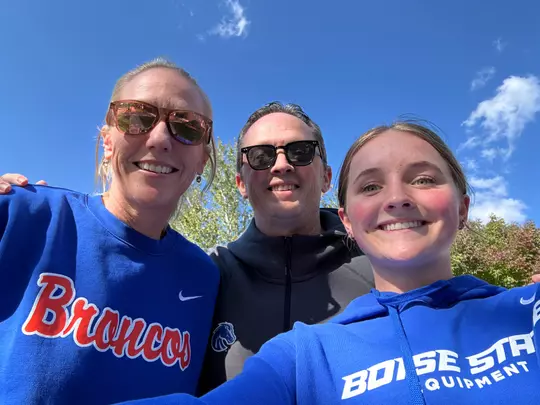
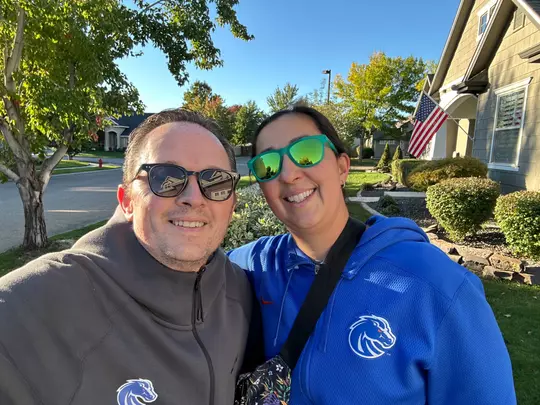
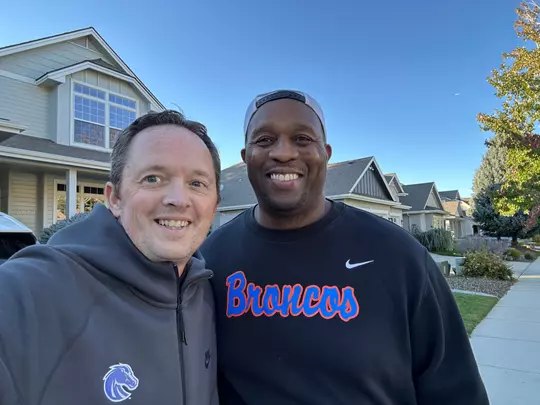
He received several visitors in those early days, several of which he persuaded to join him on his walks. Presnell was one of the first to visit his home, as was sport administrator Christina Van Tol. His fellow assistant coaches swung by for a walk, as did former players. Soon, he was accompanied by someone on nearly every walk he went on. All were amazed that Petrino was leaving them in the dust.
“They claim that I was walking as fast as I normally do,” Petrino said. “That was disputable. I thought I was really slow. But it meant more than they know that they would all take the time to come do that with me.”
Petrino didn’t touch his laptop for two weeks.
Now working alongside Petrino as a graduate assistant, Clark can reflect on how hard that must have been for him. As a player, she routinely received film clips from Petrino without much idea of how long it took him to put them together. Now, as someone who creates the clips herself, she is blown away by the amount of time he puts into creating clips for the players.
“I joke that he needs blue-light glasses because of how much time he spends watching film,” she said. “But his work ethic is second to none. He really, really, really loves what he does and he would do anything for the success of the program.”
As a player, it was obvious to see how dedicated he was to his craft. But the best part of his coaching style is the genuine care he has for everyone. She watched him treat starters, role players, student managers and support staff equally. When times hit hard in her own life, he was there for her.
“He is so great about giving his all to people and making everyone feel appreciated and heard,” Clark said. “He’s the type of person you just want to be around. His energy is extremely contagious. He’s the first one to text me on an anniversary. He keeps tabs on his people and genuinely cares for them.”
When she decided to join him for a walk, Clark’s playing career was over. At the time, she had yet to join the staff. She came because she wanted to return the favor.
Back on the Bench
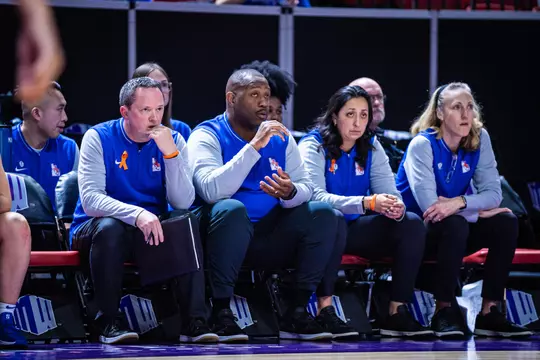
Within two weeks of his surgery, Petrino was back in the practice gym. He didn’t coach but observed the team he knew was about to have a special season.
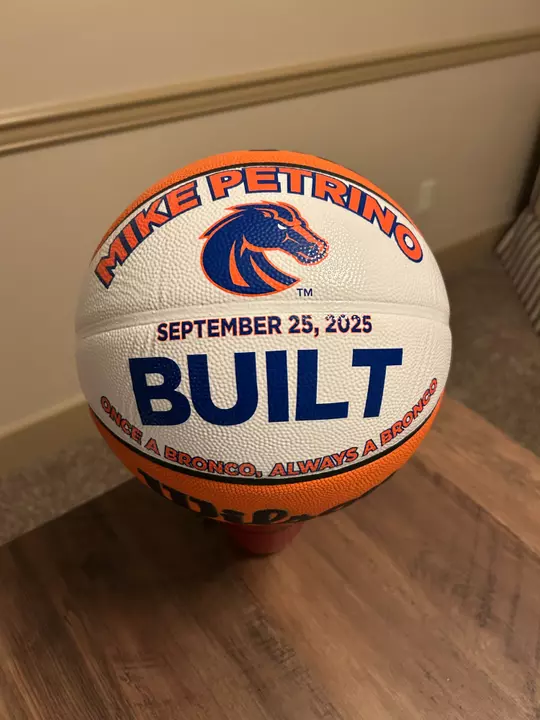
The team’s motto that season was BUILT, a team-led theme created by the senior class. At one of the practices Petrino attended, the seniors presented him with a special ball with the theme prominently displayed.
“That was very, very powerful,” Petrino said. “It’s on our family desk at home. I saw it every day during the season and it was a reminder of everybody on the team. It was like having the team with me at home. That was really special.”
Before getting back on the sidelines full time, he decided to drastically change his habits. He fit three days of rehab a week into his hectic coaching schedule. He created a self-imposed curfew, setting a time each night he would close his laptop before falling asleep. He adjusted his diet and made daily efforts to find exercise, a task that isn’t so easy for a coaches’ schedule.
“We as coaches do not do a good job of sleeping,” Petrino said. “It took a concentrated effort to work on my sleeping habits.”
During the hard nights, his motivation remained the same: the team.
“The sincere effort people put into helping you get back, you wanted to get back and help them any way you could,” Petrino said. “That was my motivation.
“Put it this way, if I had an occupation I didn’t like, it probably would have taken me a bit longer to get back.”
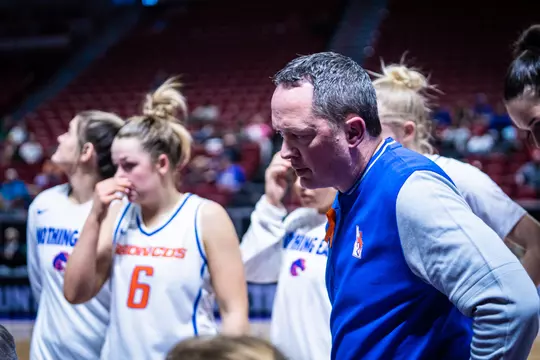
The Broncos went on to have a special season. The team finished 25-9 on the year, including a 14-6 mark in the final season of Mountain West play. Earning a No. 5 seed in the conference tournament, Boise State cruised past San Jose State in the opening round. They faced off against No. 4 New Mexico in the quarterfinal, where Tatum Thompson drained a go-ahead jumper with six seconds remaining to propel the Broncos to the semifinal. Petrino could barely contain his emotions.
Over the summer months, Petrino continued to keep turning his situation into a positive. As word got out of his ordeal, several people reached out to Petrino to ask what his symptoms were.
“I had some coworkers who went to get checked,” Petrino said. “A very well-known ref tracked me down. There’s a reason they call it the silent killer."
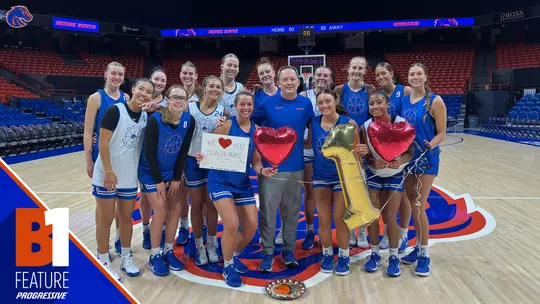
On the first anniversary of his surgery, this year’s Bronco team surprised Petrino. Unbeknownst to him, the team gathered heart balloons, a cookie cake, a sign with a Petrino-inspired dad joke on it. They also made a custom t-shirt, complete with another joke fitted perfectly to his taste.
“He’d be the first to do something like that for literally anyone else,” Clark said. “It was really easy for us to find a way to show him we loved him and were proud of him.”
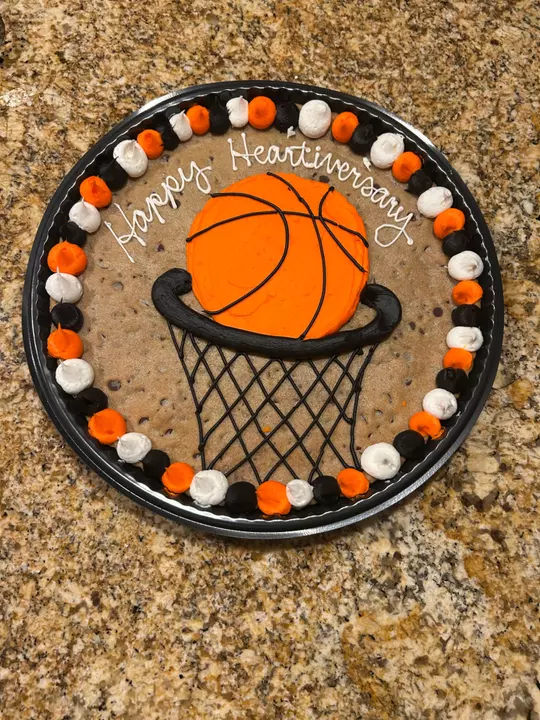
Petrino had another way he wanted to mark the day. He wanted to run. A year prior, just sitting up in his bed required tremendous strength. When he returned home, a good day was one when he could add some distance to his walking total. Now, he had enough in him to run for a few miles on the treadmill. Clark ran alongside him, jokingly telling him that his heart works.
“I got into coaching for relationships,” Petrino said. “And what this experience has taught me is the value of relationships. Life is a team sport, and I was very fortunate to have a lot of good teammates in my life to help me through it all.”
