
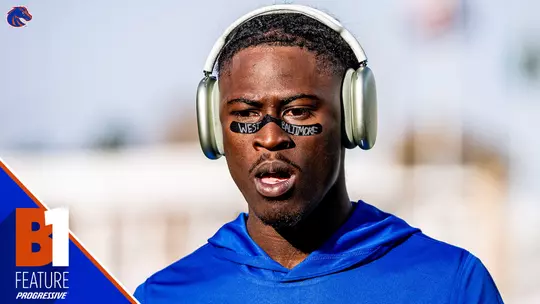
Jordan Beasley
October 31. Halloween Night. Albertsons Stadium. Boise State vs. Texas State. Pac-12 After Dark.
With 2:46 left to play in the game, it’s second down, and Boise State has the ball at the Texas State 18-yard line. Cashing in on their red zone opportunities up to that point, the Broncos had six touchdowns in seven red zone opportunities. In a game that featured over 900 yards of total offense, Boise State trailed by five and needed a big play in the final two-plus minutes to retake the lead.
“Cutforth to throw it. Cutforth throwing it to the end zone. Is it Wright? Diving catch! It is! Akeem Wright with the diving catch for the score, and Boise State leap frogs Texas State, 46-45, with 2:40 to go!”
Courtesy of KBOI, the radio home of Boise State football, those were the words legendary play-by-play voice Bob Behler used to describe the 18-yard, go-ahead touchdown pass. It was Cutforth’s third touchdown of the fourth quarter, and it completed a career night for Wright.
Eight receptions for 116 yards (14.5 avg.) and the game-winning score. Those were the numbers for a humble kid from West Baltimore whose football journey landed him in a place he was destined to be.
Following an incompletion on first down, the Broncos accomplished the mission and capped a six-play, 75-yard drive that spanned one minute and seven seconds. Entering the game due to injury, backup quarterback Max Cutforth connected with wide receiver Akeem Wright on a touchdown score that put Boise State ahead—but this time for good.
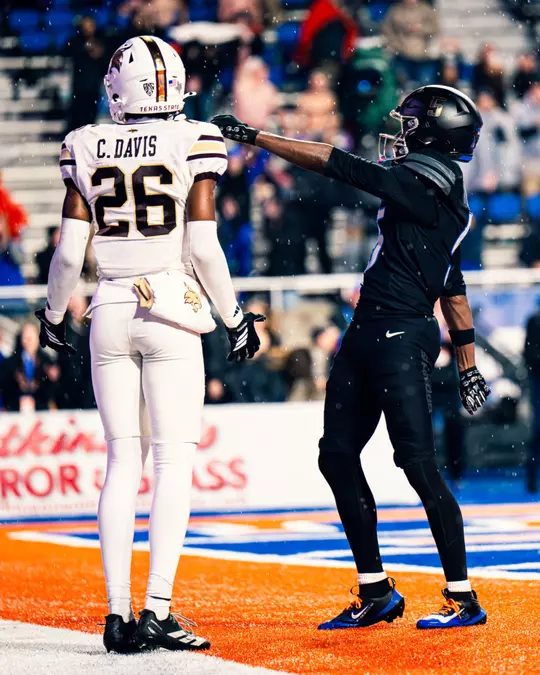
Wright puts the Broncos right back on top??CW x @pac12 https://t.co/O1RKdz4bCR
— CFP (@CFBPlayoff) November 1, 2026
HUMBLE BEGINNINGS
Located northwest of downtown, West Baltimore is a notable and historic section of the city. It’s the home of several prominent figures, including Thurgood Marshall, a known Civil Rights lawyer and the first African American Supreme Court Justice of the United States.
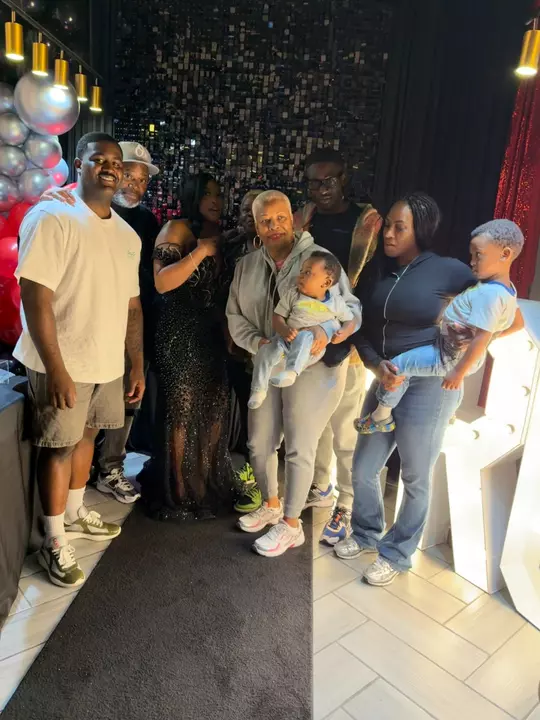
Edmondson Village, often referred to as Emberson Village, is a neighborhood in West Baltimore where the Wright family planted its roots. Coming from a home with two loving parents, Wright grew up on the city’s west side with his three siblings.
Though rich in culture and architecture, there’s an ugly side to West Baltimore. It’s regularly linked to less-than-ideal circumstances, consisting of high crime rates, violence and civil unrest. Admittedly, Wright comes from a rough neighborhood, but he also comes from a more than stable family dynamic.
“I grew up in a rough neighborhood, but not in a rough home,” Wright said. “My parents always protected me from what was going on around us. When I left the house, the range I could go was directly out in front of the house, on the side of the house, or the alley.”
It’s possible to take inventory of your surroundings and ultimately get caught up in the actions and behaviors you see, but Wright credits his parents with keeping him busy, setting a positive example and shielding him from negative influences and tempting behavior. After school activities and various sports kept Wright busy and focused. Basketball, soccer and lacrosse were mainstays during his childhood, and football, once he was old enough to play, is what allowed him to see a positive future for himself.
Upbringing and environment can have a direct impact on a young person’s perspective. It provides a lens into how they see the world, and it offers clarity into what they want out of life. The insulated environment Wright’s parents provided, along with the sports talent he possessed, allowed him to see he was destined for something beyond West Baltimore.
“Back home, there’s a lot of wrong place and wrong time,” said Wright. “I’ve witnessed all kinds of violent crime because there are a lot of people who grew up around the wrong crowd and didn't have the proper guidance. It was very eye opening for me, and I believed I needed to get away.”
Wright knew what he needed to do, and he did just that.
WANTING MORE FOR HIMSELF
Playing the quarterback position during Pop Warner and middle school, Wright transitioned to wide receiver in high school, a position that best suited his athleticism. It was during those four years when he recognized that he had the talent and ability to play and excel at the next level.
For his freshman year, Wright attended Paul Laurence Dunbar High School, a known powerhouse on the Maryland high school football scene. Fresh off winning a state championship in 2017, Wright believed he was in the right place to showcase his ability. At the time, his talent wasn’t in question, but his mindset was.
“My mindset wasn’t there about wanting it enough,” Wright said. “I was failing with bad grades, but once my mom moved from the city to the suburbs, that’s when it clicked. I knew I had to do something with my life.”
After coming to that realization and making the move to the suburbs, Wright finished his prep career at New Town High School in Owings Mills, which is roughly a half hour northeast of Dunbar.
Often, success isn’t linear, and in Wright’s case, that was no different. Navigating a global pandemic and the challenges it presented, Wright wasn’t fully able to showcase his ability until his senior year. He posted quality numbers, which supported the idea that he had the talent to play college ball, but past mistakes impacted the recruitment process.
“My past caught up with me,” said Wright. “I had bad grades and didn’t have the opportunity to go where I wanted, even though I was in communication with different coaches every day. I wasn’t ready, and it was based on the past mistakes I made. I knew I’d get to where I am currently, but I had to take a longer route and be patient.”
The route he speaks of began in 2022 at Mount Union.
PLAYING AT THE NEXT LEVEL
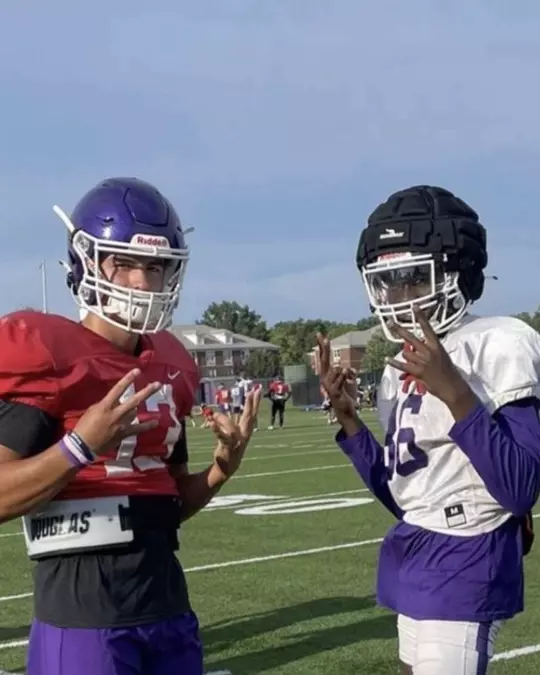
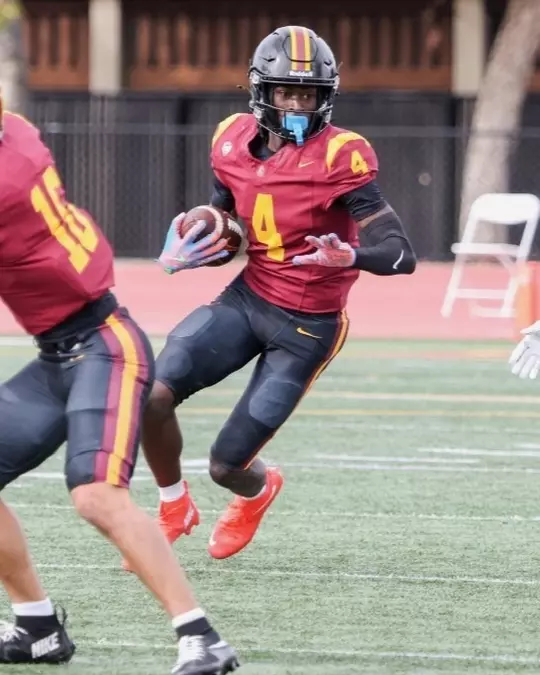
With limited offers because of a low GPA, Wright ultimately decided to further his education and playing career at Mount Union. A Division III powerhouse and member of the Ohio Athletic Conference (OAC), Mount Union has 13 national championships (most in Division III) and 36 conference titles, including 33 in the last 34 years dating back to 1992. At the time of his recruitment, the Purple Raiders, who favor their receivers, ran a spread offense, making it a nice fit for Wright on the surface.
Unfortunately, Wright never played a game in purple and white because of a significant injury that cost him his true freshman season. He tore a ligament in his ankle, forcing him to wear a boot while being sidelined for the entire year.
After a period of reflection and figuring out what was best long term, Wright decided not to return to Mount Union in 2023. Instead, he returned home to Baltimore, where he was able to regroup. He continued his rehab, got healthy and sought employment.
Spending the year at Amazon and Walmart, Wright quickly realized that working a “real job” didn’t fulfill him. Despite being close to family, working warehouse jobs served as a guiding light to help him return to the place he felt most comfortable—the football field.
“The entire year, I was at home and working, but that ended up being my breaking point,” Wright said. “I told myself, ‘Nah, I don’t belong here. I’m wasting my talent.’ That was one of the lessons that caught up with me fast. I was going to work early, and when I came home, there was nothing else to do. People wanted to party every day, and that’s just not me.”
Aware and in tune with the vision he had for himself long term, Wright focused his efforts on a return to the football field, a place that’s brought him joy since his childhood years.
HE'S BACK!
In his return to the gridiron, Wright’s journey took him from the Mid-Atlantic to Northern California—Cupertino to be exact. He decided to go the junior college route, and he attended De Anza College, who primarily competes in the California Community College Athletic Association (CCCAA).
Two years away from the game because of injury and a gap year certainly meant that there would be rust and a drop off in production, right? Wrong.
Stepping into game action for the first time since the final game of senior season, Wright appeared in 11 games as a sophomore in 2024, totaling 53 receptions for 964 yards (18.2 avg.) and 13 touchdowns. He averaged 87.6 yards per game and helped lead the team to the Golden Coast League Regular Season Championship.
Those numbers are considered impressive for any wide receiver, but even more so for someone who had such a sizable gap between game action. Exuding nothing but confidence, those numbers probably surprised most people, but not Wright himself.
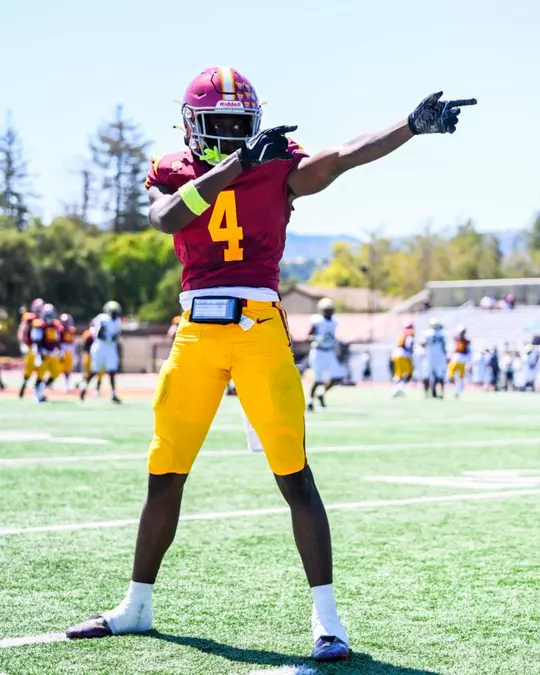
“It didn’t shock me because I always knew what I was capable of,” said Wright. “The receiver position is all about opportunity, and you have to depend on your quarterback, offensive line and the system. That system was great for me to be in, and it allowed me to be that reliable No. 1 wide receiver.”
Returning to De Anza for a second season to obtain his associate’s degree, Wright increased his production. In year two, Wright played in all 11 games once again, posting 59 receptions for 1,173 yards (19.9 avg.) with 12 touchdowns. He averaged over 106 yards per contest and won Golden Coast League Offensive MVP.
Wright knew he’d have to take a longer route and be patient, and his diligence and patience rewarded him.
“I felt as though my game developed a lot,” Wright said. “I was playing at my best, making one-handed catches and jumping over people. After two years, I felt I was ready for the big level, so I started training and preparing myself for it.”
WELCOME HOME, AKEEM
It’s no surprise that after two years at De Anza College, Wright found his way to Boise State. Dating back to his junior college days, there was interest from both sides, and the goal was to get Wright to wear the blue and orange at some point. It took a while to come to fruition, but Wright is 10 games into his tenure with a team that is currently ranked No. 15 in the latest AP Poll.
“The entire staff is the reason I’m here,” Wright said. “Since junior college, they’ve been trying to figure out how to get me here and we were coming up with scenarios to make it happen. When it finally came time for me to leave De Anza, they showed the same respect and urgency, and it felt right. I always wanted to be in a system that has care and love for me and wants to see me grow. This is that system.”
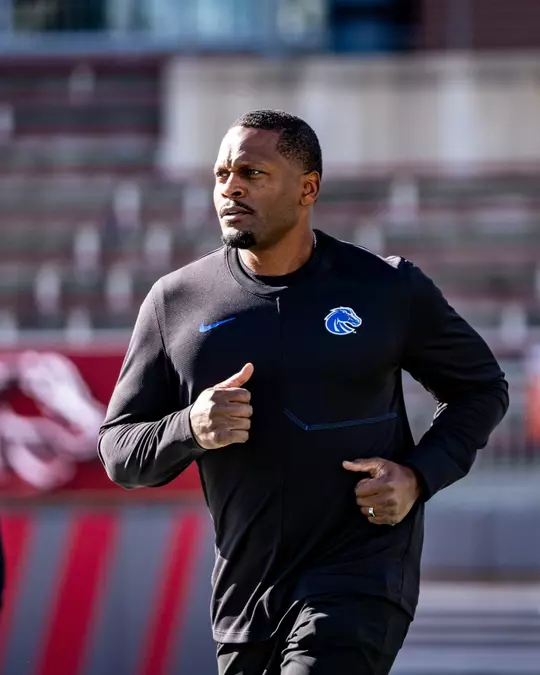
Boise State’s wide receivers are led by Alvis Whitted, who is in his first year with the program. A former NFL wide out for three teams, Whitted has specifically coached the wide receiver position at the NFL and collegiate level for 16 years dating back to 2010. Upon accepting his appointment as pass game coordinator and wide receivers coach, Whitted’s first task was a simple one.
“When I first got the opportunity to come here, one of my first jobs was to find a couple transfers who we felt would fit the criteria of being part of this program,” Whitted remarked. “I watched [Akeem’s] tape, and in doing that, I saw his physical attributes—the talent, the ball skills, run after catch. In talking to him and getting to know his family a little bit, he was a guy who was going to be hungry. To see where he is right now, it does my heart so much good because he’s a great and grateful kid who shows gratitude on a daily basis.”
As a walk on, Whitted knows firsthand what it means to grind and earn every opportunity. Part of the grind is effort, and effort is Whitted’s No. 1 non-negotiable. The expectation is to play hard all the time and do so from snap to whistle.
Given Wright’s journey, mindset and gratefulness, there’s healthy respect and relatability between coach and player which has played dividends on the field. In 10 games this season, Wright has accumulated 24 receptions for 371 yards (15.5 avg.) with two touchdowns.
Running a pro-style offense, attention to detail, alignment, assignment, footwork, and separation are all key to being successful in Boise State’s current offensive scheme. When asked what’s the most polished part of Wright’s game, Whitted provided an instant response.
“His ball skills and how he judges and attacks the ball when it’s in the air,” said Whitted. “That was the biggest thing for me when I watched his tape. He can go up and make a play and he has ball skills. He can track it and he has aggressive hands. That was the biggest thing I liked about him as we were evaluating him.”
Co-signing Whitted’s evaluation of Wright was junior wide receiver Cam Bates. Highly respected in the locker room and praised by coaches for his football acumen, high IQ and veteran leadership, Bates provided his assessment of Wright’s play.
“He’s phenomenal,” Bates said. “He knows how to get open, and he can catch anything that comes his way. His routes are crisp, he’s fast and he’s a play maker. Any time we get the ball in his hands, we’re going to see something special.”
There’s no denying the stark differences between junior college and high-major Division I football. Wright admits that there were growing pains when he arrived on campus, but with an experienced position coach and seasoned teammates who know what it takes to be a Bronco and play for head coach Spencer Danielson, Wright is adjusting just fine.
“He’s only scratched the tip of the iceberg,” Whitted said. “When you come from the junior college level, oftentimes there’s not a ton of structure. With him being here, he’s understanding structure and details, and how those details can culminate to success.”
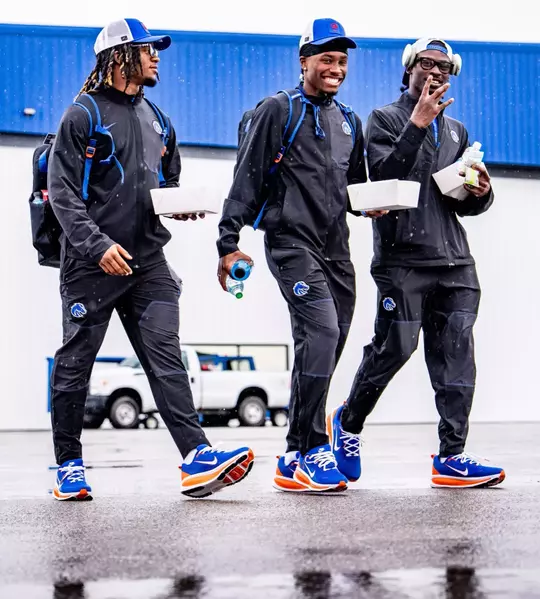
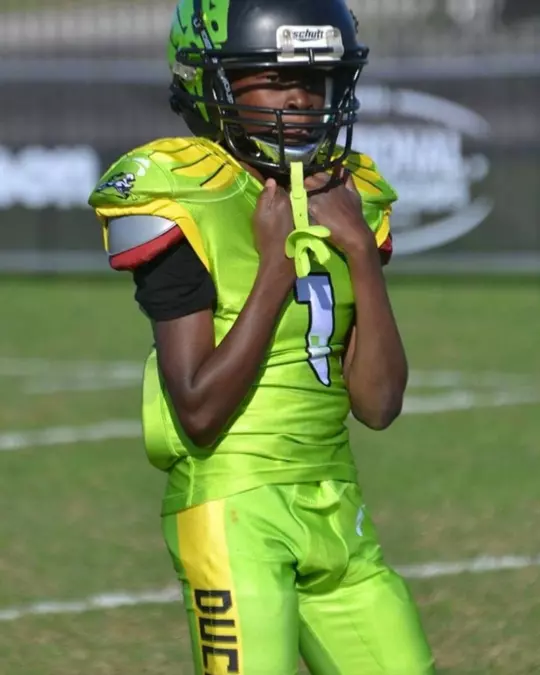
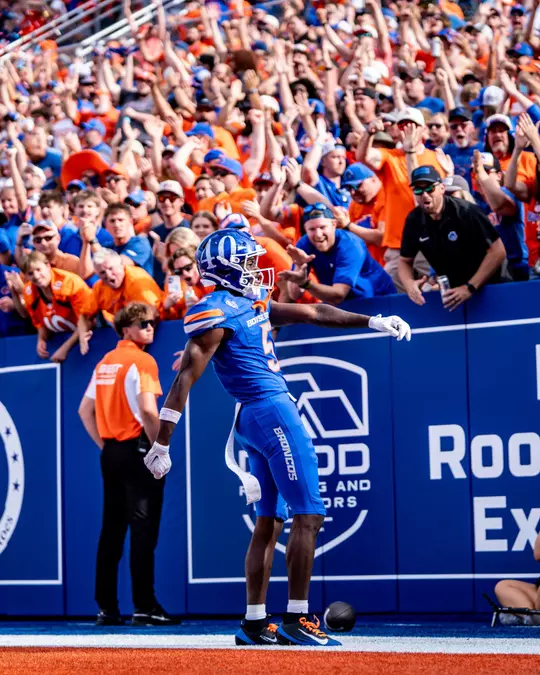
From being a young kid playing Pop Warner and playing with a football in front of his childhood home to scoring a big-time touchdown in a meaningful moment of a pivotal conference game, Wright has showcased his talent, something he never wanted to waste. Refusing to become a product of his environment, Wright has maximized his time playing the game he loves.
With one year of eligibility remaining, Wright says he’s here to stay. His position coach believes in him, his teammates believe in him, and most importantly, he believes in himself. It’s that exact belief that’s taken him from the warehouses of Amazon and Walmart to the Boise State Broncos.