
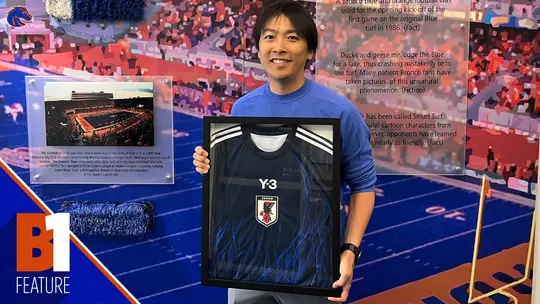
Boise State Assistant Athletic Director Recruited by Japanese National Team for World Cup
Keita Shimada will help navigate logistics to aid in athlete recovery
Site Visit
In May of 2025 Keita Shimada, Boise State assistant athletic director for sports performance/Olympic sports, was sitting in a department staff meeting when Nathan Burk, senior associate athletic director for operations/governance, asked if anyone spoke Japanese.
Burk explained that two representatives from the Japanese Football Association (JFA), i.e., referred to as soccer in America, were in the United States in advance of their international soccer friendly with the U.S. National Team later in the year.
The duo was coming to Boise State to tour the facilities and determine if Boise and Boise State could potentially serve as a base camp location for the JFA during the FIFA World Cup 2026™.
A national Team Base Camp is a training site and accommodation pairing that will serve as the primary base for teams during the group stage, where they will train, rest and prepare for their matches.
Shimada raised his hand to volunteer.
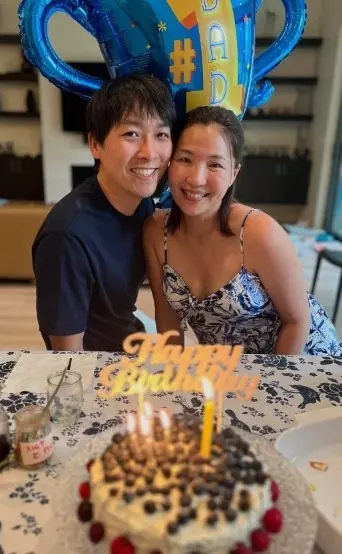
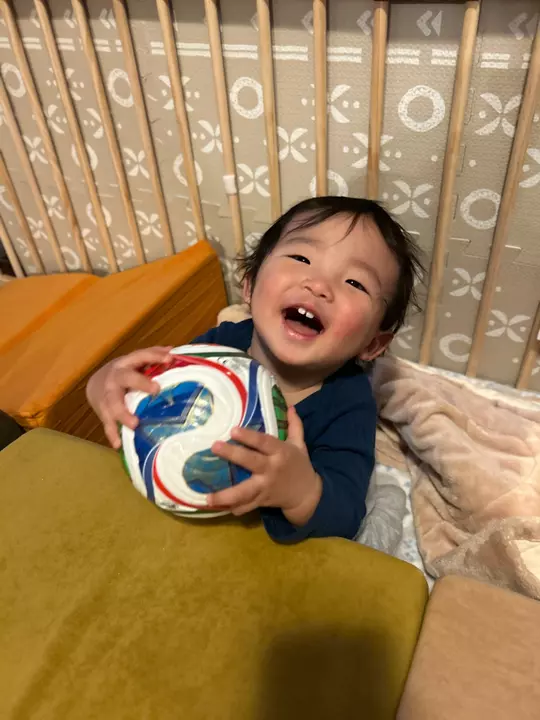
The timing was ironic as he had just concluded a lengthy visit from his spouse Yuka and young son Len, who had just returned to Tokyo, Japan. The opportunity to connect with fellow countrymen tied to the JFA, known as the Blue Samurai, would be a welcome distraction.
A few weeks later, Naoki Tsumura and Masayuki Yoshikawa arrived on campus via Uber which would provide Shimada with an opportunity to offer transportation back to the hotel later in the day.
Tsumura, who had joined the JFA in 2007, was responsible for overseeing all base camp operations. Now planning for his fifth World Cup, he knew exactly what they would need to be successful on the world’s stage.
Throughout the tour they would talk about family, Japan, Blue Samurai, and World Cup soccer. Although the duo was extremely impressed with Boise State, Bronco facilities, and Boise itself, it did not meet all the criteria for the JFA Base Camp.
The site visit concluded with a question from Tsumura to Shimada.
“Would you join us for dinner?”
To fully comprehend the significance of the dinner invitation, it helps to first understand the profound role soccer and the World Cup have played in Shimada’s life.
Rewind

Born in Tokyo, Shimada moved with his family to upstate New York when he was five years old. He would reside in the U.S. for ten years and then return to Japan for secondary school.
It was during his time in the U.S. that he discovered soccer.
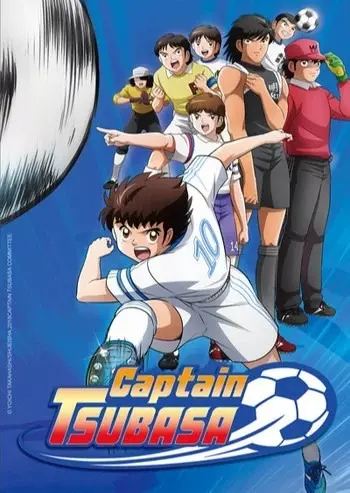
“My brother played soccer growing up,” said Shimada. “He was five years older and I wanted to do everything my big brother was doing. That is how I fell in love with the game. Oh, and there was an old anime soccer game called Captain Tsubasa that I played religiously.”
Captain Tsubasa
Captain Tsubasa began in 1981 as a manga series, published in the weekly Shonen Jump magazine. It tells the story of a young footballer, Ozora Tsubasa, as he hones his skills and competes against rivals throughout Japan. The colorful characters that appear throughout the stories and their skillful play made manga and subsequent anime a hit around the world. It has been translated into multiple languages and has sold over 90 million copies worldwide.
Tsubasa's emergence gave rise to a soccer boom in Japan, accelerating the development of the sport. Tsubasa is also said to have inspired famous soccer players all around the world—such as Argentina's Lionel Andrés Messi, France's Zinedine Yazid Zidane, Italy's Alessandro Del Piero, and Spain's Fernando José Torres Sanz—as they honed their skills.
First World Cup
The 1994 FIFA World Cup brought the world's most popular game and biggest sporting event to the United States. To this day, it is considered one of the most successful sporting events worldwide. Held during the summer in nine venues across the United States, the tournament broke World Cup records for total attendance (3,587,538) and average attendance per match (68,991). Both are records that stand to this day. The 1994 World Cup was also a catalyst that would transform American soccer and launch Major League Soccer (MLS) and all that would follow, including the National Women’s Soccer League (NWSL), player development academies, referee and coaching education programs, and soccer-specific stadiums.
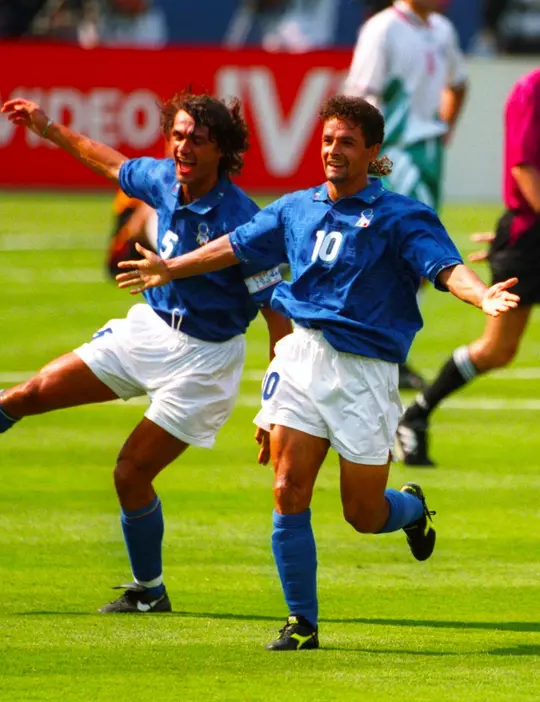
I wanted to be just like him and become a professional soccer player.Keita Shimada on Italian Superstar Roberto Baggio
During the tournament, Shimada fell in love with Italian superstar Roberto Baggio, nicknamed the Divine Ponytail. His ability to score from impossible angles, his calm under pressure, and his grace on the ball captivated fans.
The tournament was both Baggio's greatest triumph and his most painful moment. He carried the Italian team through the knockout rounds, scoring crucial goals against Nigeria, Spain and Bulgaria, but in the finals, Brazil was crowned world champions after beating Italy 3-2 in a penalty shootout. The first time a World Cup final had to be decided on penalties.
Although Japan did not qualify for the 1994 tournament, Shimada began to follow Hidetoshi Nakata, who is widely regarded as one of the greatest Asian players of the late 1990s and early 2000s. Nakata was one of the first successful Japanese players to play in Europe.
“I remember I would wake up in the morning and my dad, who was always up before me, would share news about Nakata’s latest hat-trick or an incredible goal. It was always headline news in Japan.”
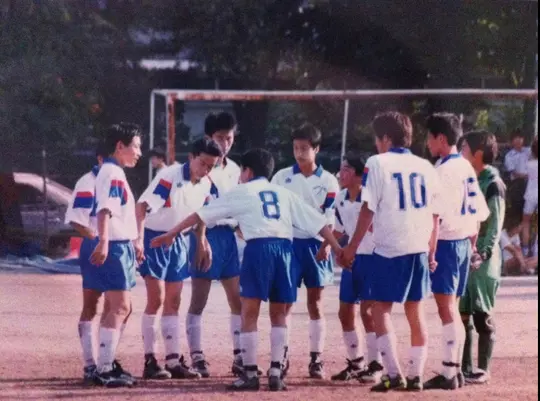
Shimada continued to play soccer experiencing both successes and setbacks along the way.
I had my fair share of high moments, but I got to a point where I knew I didn’t have it.Keita Shimada
Career Path Discovered
Shimada was raised in a traditional Japanese family where education was highly valued and parents played an active role in guiding their children’s future. Japan’s highly regimented and competitive academic environment further reinforced those expectations, with strong emphasis placed on parental involvement and long-term planning.
He recalls a very specific conversation he had with his father, who asked, “What do you want to do after high school?”
“I’ll go to college,” Shimada responded.
When pressed on what he wanted to study, he initially answered with what he thought would be most acceptable, doctor, lawyer, or business but his love of soccer still held a place in his heart.
Everything changed in 2002 when Japan and South Korea hosted the FIFA World Cup. While watching a match on television, Shimada saw a medical professional sprint onto the field to treat an injured player.
“They pulled out the aerosol cold spray, and the athlete popped right back up,” Shimada recalled. “I thought, that is awesome, someone who can fix injuries like that and be on the field. I want to be that person.”
In that moment, he discovered a new direction.
Shimada shared this new career path with his father, who began to research opportunities, only to discover athletic training or sports medicine was limited in Japan at the time.
His father did identify programs in the United States, including Oregon State University in Corvallis. A family connection, his mother’s classmate, who had earned a Ph.D. in entomology from Oregon State, endorsed the school, noting its strong academics, focused environment, and scenic setting.
Shimada enrolled at Oregon State, earning his Bachelor of Science degree in 2007. He remained for an additional year as an intern, working with the football and wrestling programs, gaining valuable hands-on experience.
In 2008, Shimada moved to Boise to serve as a graduate assistant at Boise State. He was hired full-time in 2010 and currently serves as an associate athletic trainer, working with gymnastics and men’s and women’s golf.
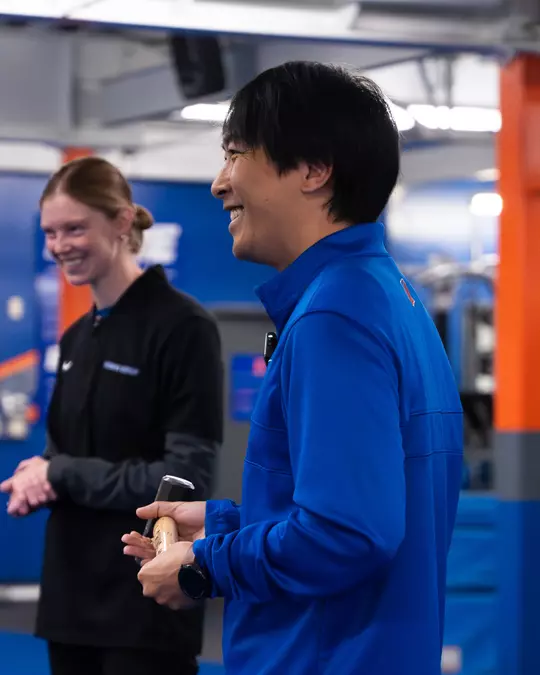
Back to Boise and Dinner with Representatives from JFA
During dinner, Shimada asked Tsumura if there was anything he could do to help.
Tsumura shared a very specific need: the team was looking for a U.S. based vendor to provide cryotherapy chambers to support player recovery at each World Cup venue. He asked if Shimada could help identify vendors and serve in an advisory role alongside the medical staff.
Shimada immediately got to work.
Step 1 – Identify a Vendor
He began reaching out to his athletic trainer network, which led him to additional contacts and vendors. That process ultimately connected him with Cool Factor, a company that could meet the federation’s needs.
Their fully equipped recovery vehicles units were especially valuable, as they could be transported from site to site. With a vendor identified and units tentatively secured, the next phase began. The wait for December 5, 2025.

Step 2 – Japan’s World Cup Draw
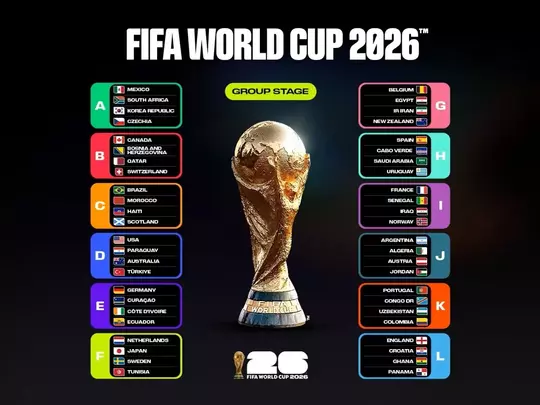
The World Cup Draw would determine Japan's group, match dates, and host venues.
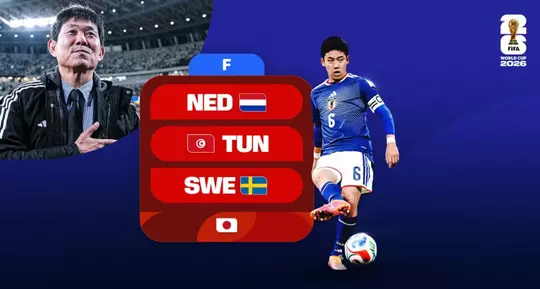
Now that those details were finalized, Shimada could begin building out the schedule.
Step 3 – Logistics
Japan’s 2026 FIFA World Cup campaign is set to begin on June 14 at AT&T Stadium in Arlington, Texas.
Shimada will be based in Dallas, arriving two days before the first match to oversee delivery, staff training, and operation of the cryotherapy units on behalf of the federation.
Following the opening match, Japan will travel to Monterrey, Mexico, for its second group-stage match on June 20 at Estadio BBVA. For this leg, two mobile cryotherapy chambers will be deployed.
The Mexico stop introduced an additional complexity. Shimada and the team had to determine what type of chamber would work best at the venue—either liquid nitrogen or electric. If electric units were used, they would require a diesel-powered generator. To ensure smooth operations, a local coordinator was secured to manage and oversee both mobile units.
Japan will then return to Arlington to close out group play on June 25 at AT&T Stadium, aiming to secure a spot in the knockout rounds. At that point, the initial phase of the plan will be complete.
Group Stage to Knockout Round
The 2026 tournament introduces a new format, expanding the knockout stage to 32 teams. Matches in this phase, scheduled from June 28 to July 19, are single-elimination, meaning each game is win-or-go-home. Japan’s path forward will depend on its group-stage finish.
Step 4 – Contingency Planning
To prepare for every possible scenario, Shimada has already mapped out detailed plans based on where Japan could finish in the group standings. Each outcome, i.e., first, second, or third place, comes with a different travel path and venue schedule, requiring adjustments to how and where the cryotherapy units are deployed.
“I’ve already worked through the routes for each scenario,” Shimada said. “Each path determines where the units go next and how we support the medical staff and athletes.”
His preparation has put the federation in a strong position. At a recent FIFA operations meeting, Shimada learned that many other national team representatives were still working to secure vendors and finalize logistics.
By contrast, Shimada and the JFA are well ahead of schedule.
“We are in a good place,” he said. “The medical staff and legal teams have approved the preparations, and we are ready to move forward.”
Outlook for Blue Samurai
This tournament will mark Japan’s eighth consecutive FIFA World Cup appearance, a streak that began with its first-ever qualification in 1998. In Qatar in 2022, Japan advanced farther than they had in previous tournaments, all the way to the Round of 16 after impressive group-stage victories over both Spain and Germany.
“This current group of players has been building toward this moment for years,” Shimada said. “Many of these players competed together at the youth national team level. They are extremely competitive and are now entering their prime.”
With that experience and growth, confidence is high.
“We truly believe this is the team that can break through,” he added. “There’s a real sense that something special is possible.”
Sharing the Experience
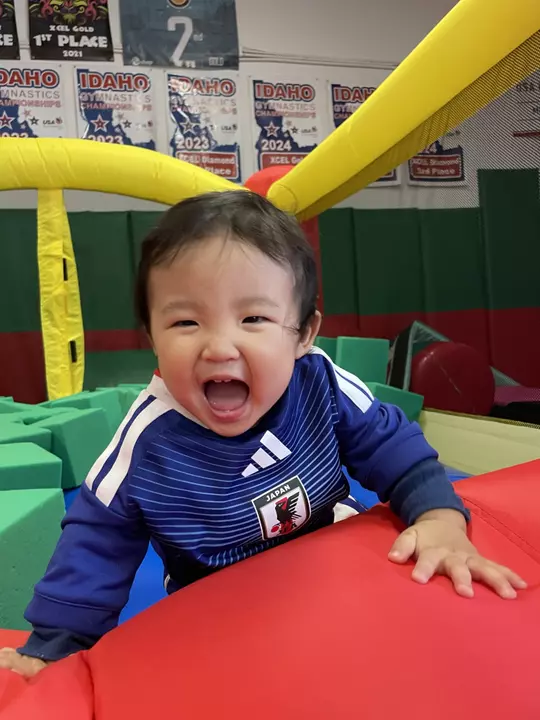
Shimada’s father-in-law secured tickets to the third match through the World Cup ticket lottery, giving Shimada a rare opportunity to step away from his professional role and simply enjoy the game as a fan. He plans to be in the stands with his wife and young son, who will travel to the U.S. from Tokyo, to embrace the moment together as a family.
“Maybe it’s something he’ll remember—maybe not,” Shimada said.
Still, the experience means far more than memory alone.
“I want him to be part of it,” he said. “Even if he’s too young to remember, it’s about the pictures, the videos, and the story we’ll be able to share with him someday.”
For Shimada, the moment is rooted in something deeper than soccer.
“It’s about being together,” he said. “Just sharing that joy with my family—that’s what makes it special.”
When asked about his reaction to a Japanese championship?
“To witness something like that for the first time as a country would be incredible,” he said. “We are so proud of these players, the coaching staff, and everyone involved. It is an honor to be part of it and who knows, maybe we will even witness history.”